
The Supreme Court has sought responses from the Centre, Election Commission, and Law Commission on a Public Interest Litigation (PIL) advocating for comprehensive reforms in the anti-defection framework. The PIL highlights concerns about elected representatives misusing resignations to avoid disqualification and influence government stability, proposing measures for time-bound adjudication and institutional review of the Speaker's role.
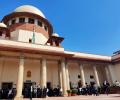
The Supreme Court has agreed to hear a plea by senior advocate Kapil Sibal challenging the interpretation of the Tenth Schedule's 'deemed merger' provision, which allows MLAs and MPs to avoid disqualification under the anti-defection law, citing its 'huge repercussions on our polity'.

The Eknath Shinde faction strongly defended its lawmakers in the Supreme Court, asserting that dissent within a political party does not constitute defection under the Tenth Schedule of the Constitution. They argued that their actions aimed to restore the Shiv Sena's original ideological identity and that the anti-defection law should not be used to suppress internal disagreement.

The Calcutta High Court has cancelled the membership of senior leader Mukul Roy in the West Bengal assembly under the anti-defection law, marking a significant moment in Indian jurisprudence.

Should the anti-defection law in India exist only to prevent democratically elected governments from being toppled?

The Lok Sabha Secretariat has issued notices to 20 rebel Trinamool Congress (TMC) MPs, seeking their replies within seven days regarding petitions filed by TMC leader Abhishek Banerjee for their disqualification under the anti-defection law.

The 20 rebel TMC MPs who aligned themselves with the NCPI have submitted their replies to Lok Sabha Speaker Om Birla, defending their decision to leave the party and asserting that they followed all parliamentary and constitutional norms, NCPI parliamentary chairperson Kakoli Ghosh Dastidar said on Tuesday.

A major drawback of the Anti-Defection Law is the lack of precise definition of defection itself, points out Rup Narayan Das.

The Eknath Shinde faction informed the Supreme Court on Wednesday that Uddhav Thackeray's decision to form the Maha Vikas Aghadi government with the Congress and NCP in November 2019 departed from the Shiv Sena's core ideological platform. They argued that their dissent in June 2022 was an effort to restore the party's original identity, not an act of defection, and that the anti-defection law should not suppress collective dissent.

It passed an amendment that deletes the provision allowing one-third of a legislature party to split without attracting provisions of the anti-defection law.

Lok Sabha Speaker Om Birla is set to make crucial decisions regarding the status of rebel factions from the Trinamool Congress (TMC) and Shiv Sena (UBT) before the Monsoon session of Parliament begins on July 20, following demands for their disqualification by their parent parties.
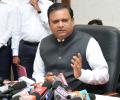
Birla said Narwekar will head the committee that will be formed to review the anti-defection law.

The Aam Aadmi Party has petitioned for the disqualification of seven Rajya Sabha MPs who defected to the BJP, citing violation of the anti-defection law and betrayal of the people's mandate.

'What happens in case the party joins a post-poll alliance with another party whose ideology the legislator is opposed to?' 'Should s/he let down her/his voters merely because her/his party leadership has taken a decision in that direction?' asks Aakar Patel.
Prima facie, sources feel that the Tenth Schedule of the Constitution, the anti-defection law, has been abused.

The National Automated Fingerprint Identification System database expanded from 3.2 million records in 2012 to 11.2 million.

The Supreme Court has agreed to hear a plea from the Shiv Sena (UBT) challenging Lok Sabha Speaker Om Birla's decision to approve the merger of six of its MPs with the Eknath Shinde-led Shiv Sena faction. The UBT faction argues these defections violate anti-defection laws.
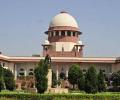
The apex court was deciding on the question whether an expelled member could be disqualified under the law, if he or she defies party whip.
An analysis by ADR and National Election Watch reveals that 111 MPs and MLAs changed parties after winning elections between 2022 and 2026. Nagaland and West Bengal recorded the highest number of switches. The report also highlights party-level impacts and suggests reforms to the anti-defection framework.

Shiv Sena (UBT) MP Sanjay Raut has claimed that 20 to 22 MLAs from the Ajit Pawar-led NCP faction might break away, hinting at significant political shifts in Maharashtra. He also criticised the ruling Mahayuti's conduct in the Gokul Dairy polls, alleging undemocratic practices and that victory was snatched from the Congress panel.

A group of rebel Shiv Sena (UBT) MPs reportedly met Lok Sabha Speaker Om Birla, claiming support of six members, while Uddhav Thackeray loyalists deny any defection. The party has issued a whip for a crucial meeting, and the anti-defection law's implications are being discussed amidst allegations of bribery.

Lok Sabha Speaker Om Birla has approved the merger of six Shiv Sena (UBT) MPs with the Eknath Shinde-led Shiv Sena and allowed separate seating for 20 rebel TMC lawmakers who joined the Nationalist Citizens Party of India (NCPI), ahead of the Monsoon session.
Rebel Trinamool Congress MP Arup Chakraborty on Monday said the breakaway faction is trying to "rectify" the party, and would fight for the control of its election symbol, even as the Mamata Banerjee-led outfit termed the move illegal under the anti-defection law.

Lok Sabha Speaker Om Birla is set to make crucial decisions regarding the disqualification petitions against rebel MPs from the Trinamool Congress and Shiv Sena (UBT) before the upcoming monsoon session of Parliament. Both parties have sought the disqualification of their defecting members under the anti-defection law, while the Speaker is consulting legal experts and examining precedents to ensure legally sound decisions.

The Shiv Sena (UBT) remains optimistic that Osmanabad (Dharashiv) MP Omprakash Raje Nimbalkar, one of six dissident parliamentarians, will not abandon the Uddhav Thackeray-led party, despite his recent statement about deciding his political future after consulting his constituents.

Lok Sabha Speaker Om Birla has invited Trinamool Congress leader Abhishek Banerjee for a meeting on June 19 to discuss the party's internal split. This comes after 20 rebel TMC MPs sought recognition as a separate group following their merger with the Nationalist Citizens Party of India. Birla plans to hear both factions before making a decision, while Banerjee has argued against recognising any separate group within the AITC, citing anti-defection laws and a recent Supreme Court judgment.

The Central Board of Indirect Taxes and Customs (CBIC) has issued new guidelines for GST officers, mandating year-wise demand breakdowns in multi-year notices, clarifying registration procedures, and streamlining export rules to reduce litigation and improve taxpayer clarity.

Prime Minister Narendra Modi, Union ministers and leaders of the National Democratic Alliance allies on Tuesday attended the ruling coalition's weekly meeting of parliamentarians, where the absence of three Nationalist Citizens Party of India (NCPI) MPs stood out amid signs of differences within the 20-member group of Trinamool Congress rebels over its association with the alliance.
Dissident Trinamool Congress MPs have announced their merger with the Nationalist Citizens Party and met Lok Sabha Speaker Om Birla to request a separate seating arrangement, claiming two-thirds of TMC's Lok Sabha members support the move. The Mamata Banerjee-led faction, however, argues against recognising any separate group, citing anti-defection laws.

Six of the nine Shiv Sena-UBT Lok Sabha MPs skipped a crucial parliamentary meeting, signalling a likely split and potential merger with the Eknath Shinde-led faction, which could trigger disqualification proceedings under the anti-defection law.

A sharp political slugfest erupted on Thursday as Congress leaders and INDIA bloc allies rallied behind MP Priyanka Gandhi Vadra's son, Raihan Vadra, accusing the authorities and Centre of censoring artistic expression after Bikaner House requested the removal of several photographs from his exhibition.
Trinamool Congress (TMC) leader Abhishek Banerjee has formally petitioned Lok Sabha Speaker Om Birla to disqualify 20 rebel MPs, arguing their claimed merger with the lesser-known Nationalist Citizens Party of India (NCPI) is invalid under the anti-defection law.

The Uddhav Thackeray-led faction of the Shiv Sena told the Supreme Court on Tuesday that the Election Commission's (EC) determination as to which group constitutes the political party should come after a decision on the disqualification proceedings against the MLAs, who have deserted their camp.

Ajit Pawar-led group was the real Nationalist Congress Party when two factions emerged in the party in July 2023, Maharashtra assembly Speaker Rahul Narwekar on Thursday held.
BJP leader Priyanka Tibrewal joined a protest in Kolkata against rebel TMC MLA Sandeepan Saha and his father, Swarna Kamal Saha, over allegations of land grabbing and extortion. The protest highlighted public resentment against the duo, who are accused of demanding "cut money." Sandeepan Saha is also part of a TMC rebel faction that has sought recognition as a separate bloc.

A fourth AIADMK MLA, Esakki Subaya, has resigned from the Tamil Nadu Assembly and is seen with TVK leaders, following three other rebel MLAs who also quit and joined the ruling TVK. This move has sparked strong accusations of 'horse-trading' from the AIADMK and Congress, while the Speaker insists he is acting within legal frameworks.

Lok Sabha Speaker Om Birla will hear both the defected TMC MPs and the faction led by Mamata Banerjee before deciding on recognising the breakaway group's proposed merger with the Nationalist Citizens Party of India (NCPI).
The Supreme Court has dismissed a Public Interest Litigation challenging the constitutional validity of the 2018 amendment to the Scheduled Castes and Scheduled Tribes (Prevention of Atrocities) Act. The amendment had restored restrictions on anticipatory bail and removed requirements for preliminary inquiry and prior approval before arrest. The court cited its 2020 verdict which had already upheld these amended provisions, rejecting arguments about potential misuse and "reverse discrimination."
